Smart Campus Analytics for KPMG in India, HacXLerate 2026
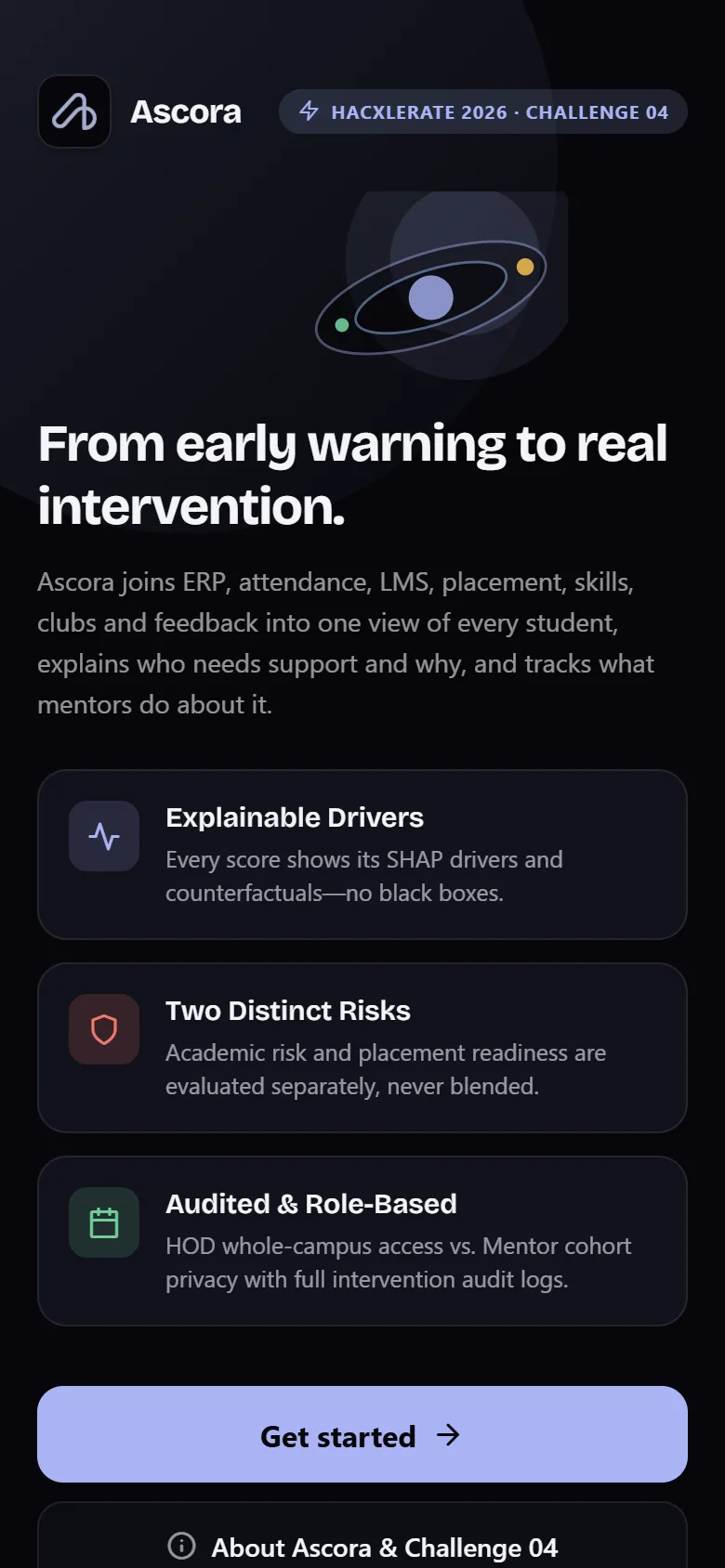
From early warningto real intervention.
Ascora reads seven campus systems as one, explains which students need support and why, and tracks what mentors do next.
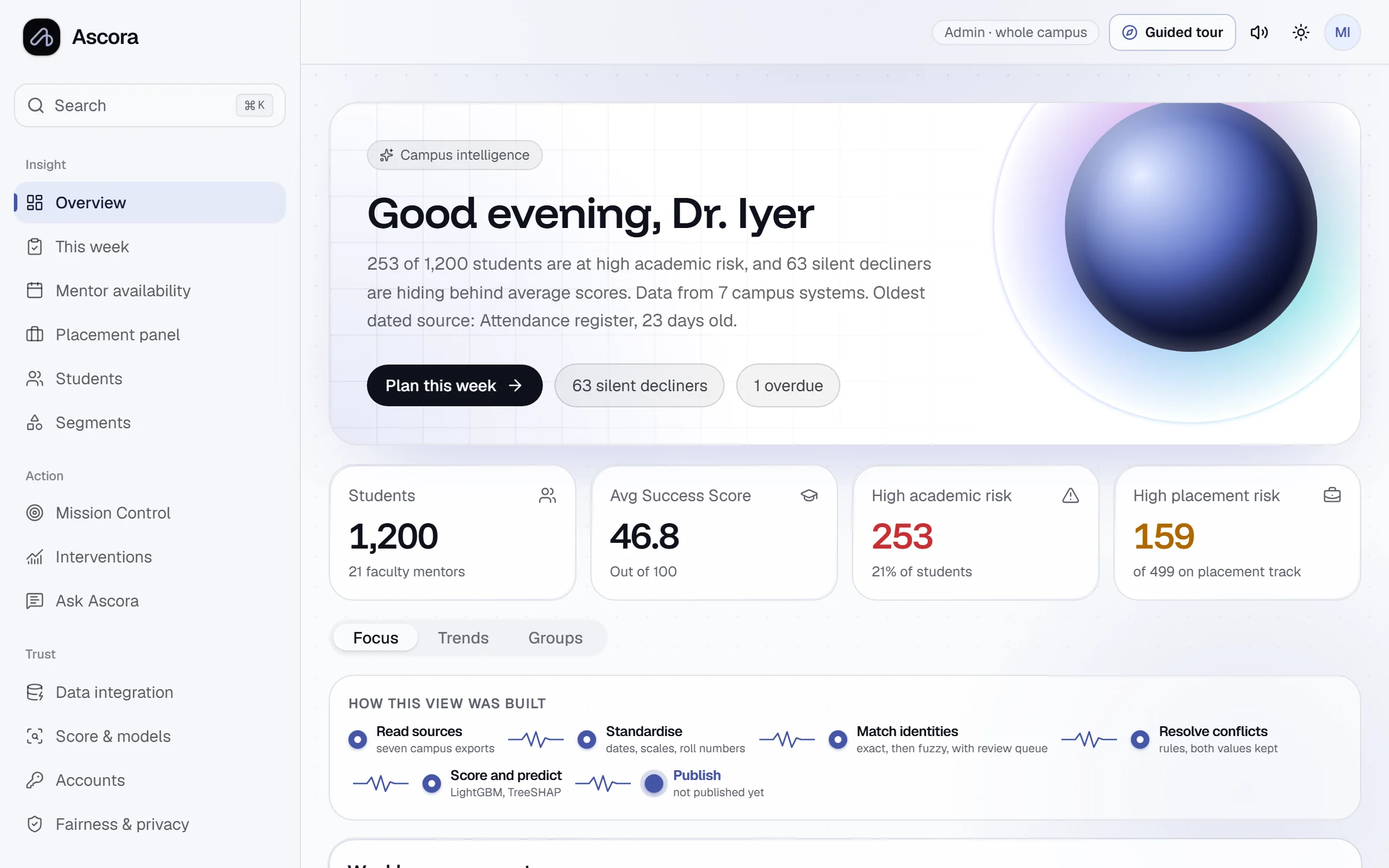
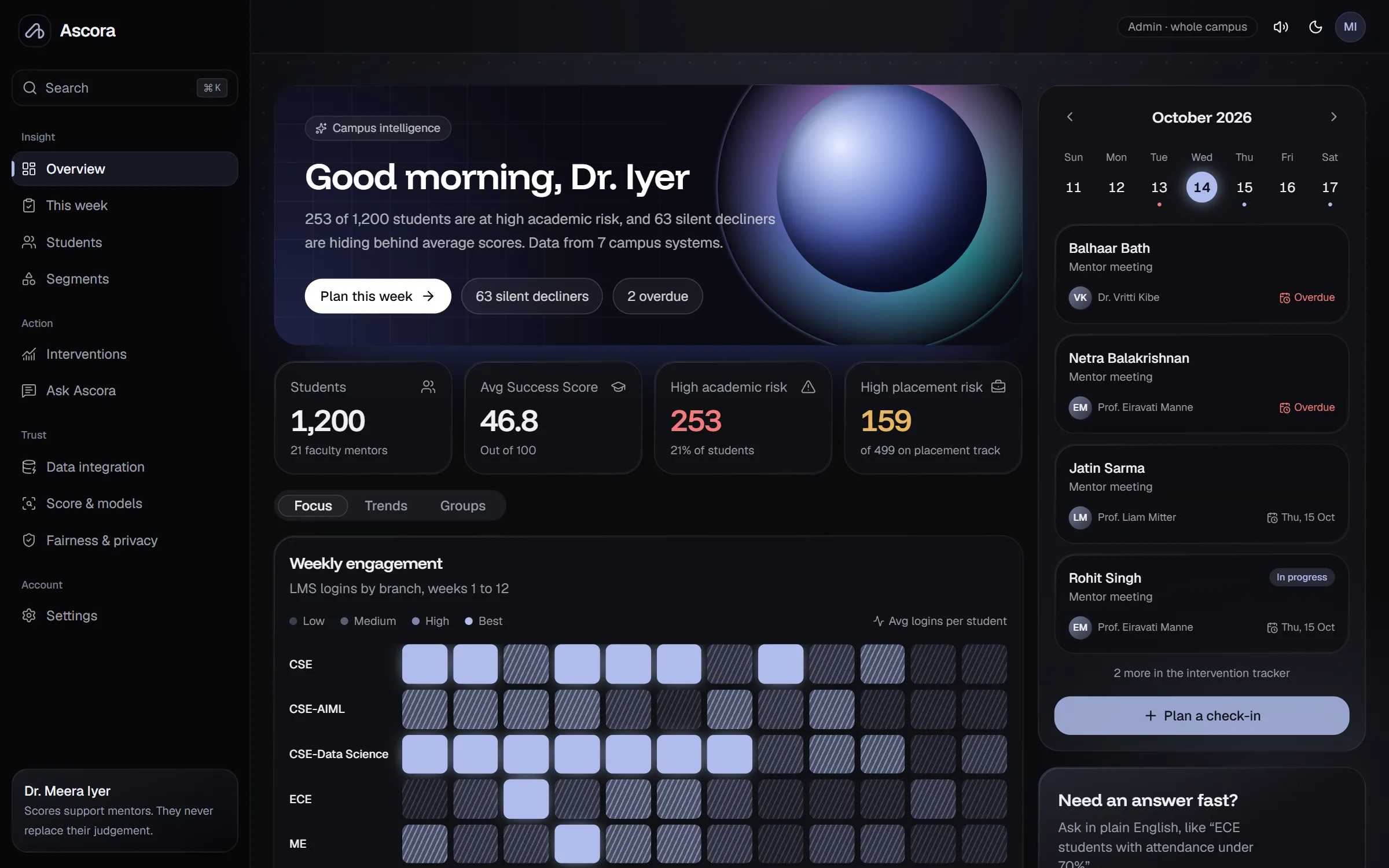
Catch the quiet slide. Then do something about it.
Ascora reads seven campus systems as one, shows mentors who needs help and why, and tracks what happens next.
- Explainable scores
- Mentor workflow built in
- Role-based access
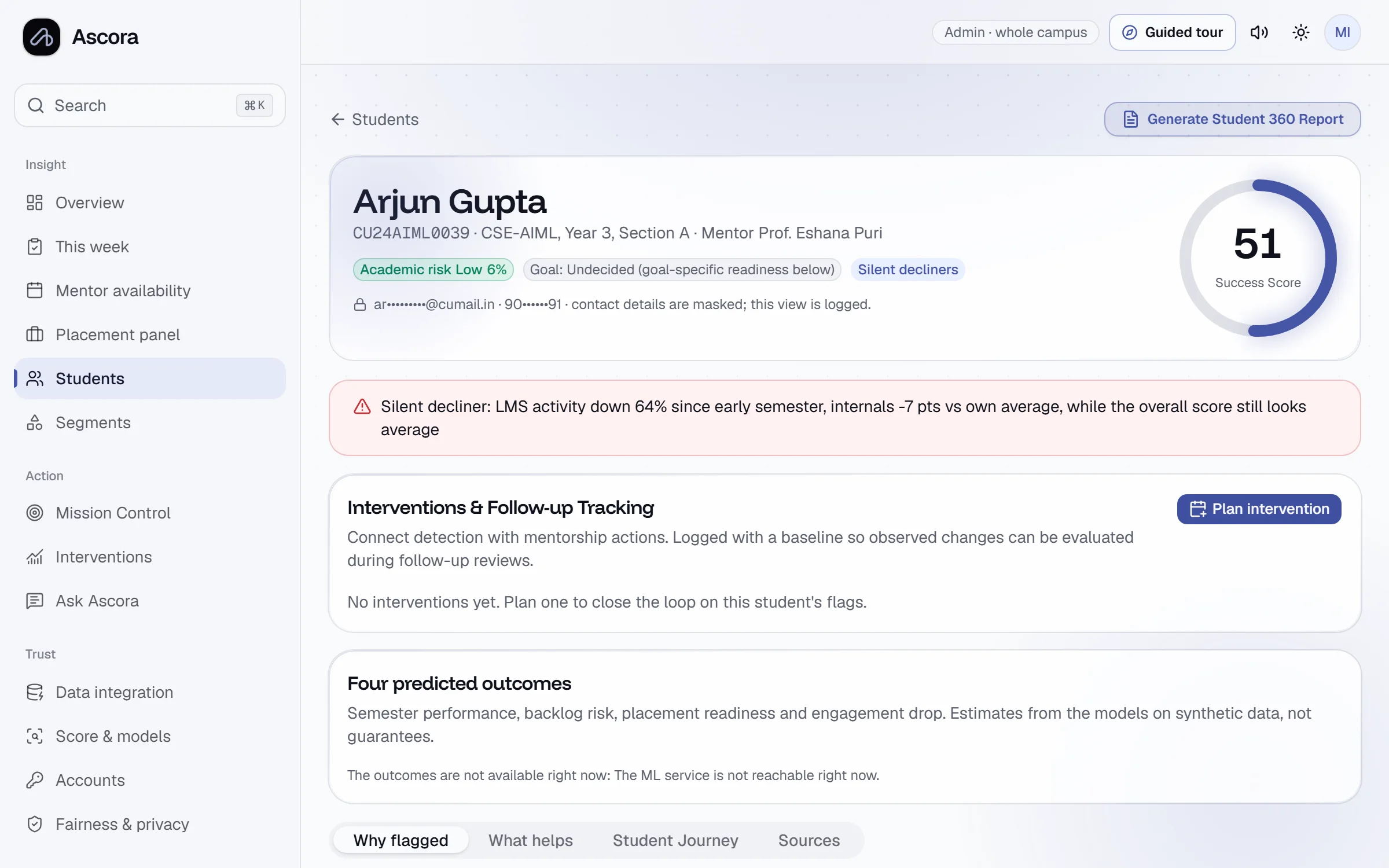
Arjun Gupta
CSE-AIML, Year 3
9.15
CGPA
LMS engagement, weeks 1 to 12
- ERP marks
- Attendance register
- LMS activity
- Clubs and events
- Placement cell
- Skills assessment
- Feedback forms
- 0
campus systems joined
ERP, attendance, LMS, clubs, placement, skills, feedback
- 0
rows unified into 1,200 students
duplicates merged, 60 conflicts resolved by rule
- 0%
precision on auto-matched links
measured against hidden ground truth
- 0.00
academic risk AUC
held-out test set, calibrated
Measured on a generated sample cohort of 1,200 students. No real student data is used.
The loop
Most early-warning systems stop at the red flag. Ascora starts there.
1 of 4
Flag
Seven systems become one view of each student. Ascora ranks who needs attention first, and finds the quiet decliners a marks sheet hides.
2 of 4
Explain
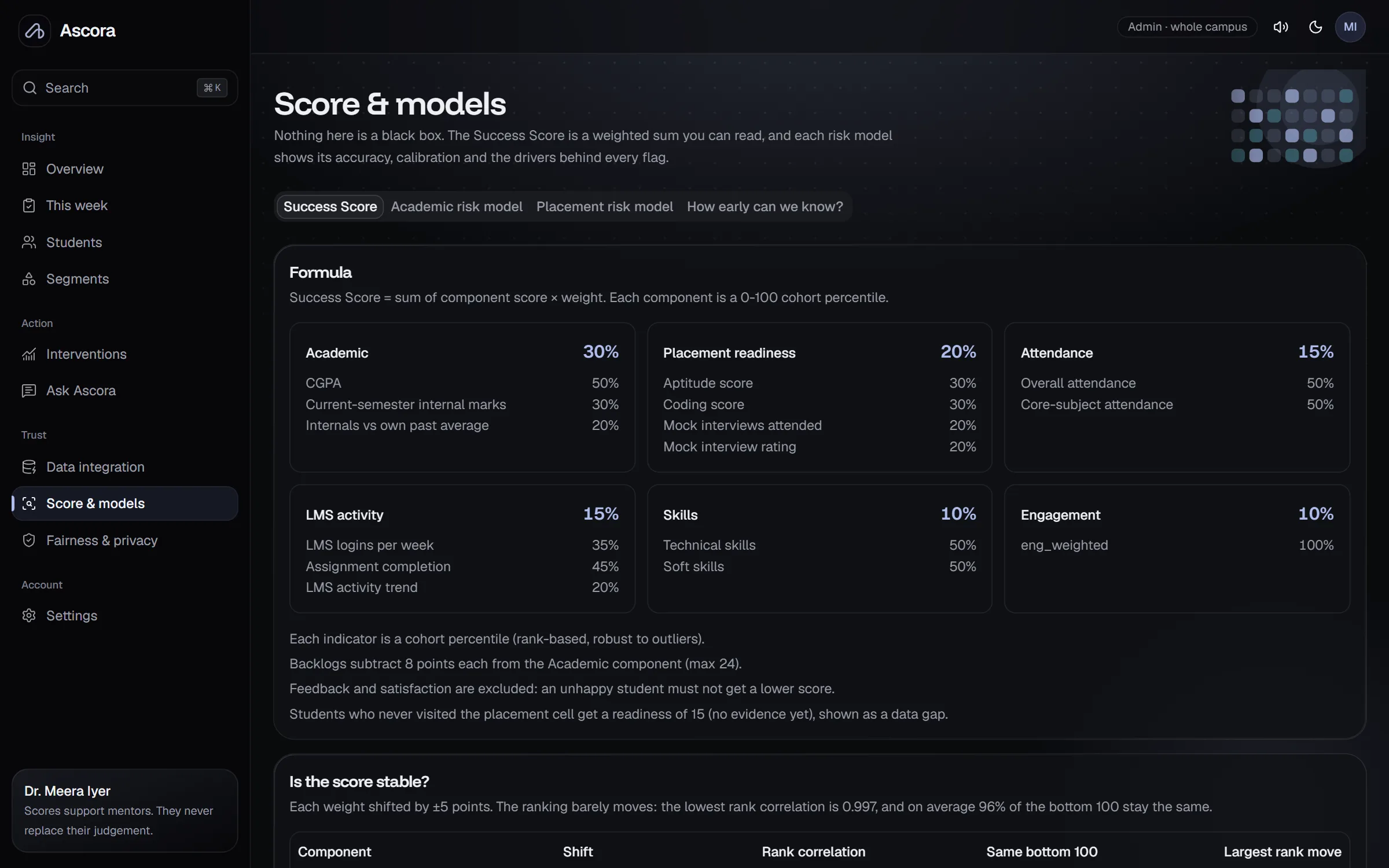
Every flag shows its reasons in plain language, compared with the cohort, and marks which ones a mentor can actually change.
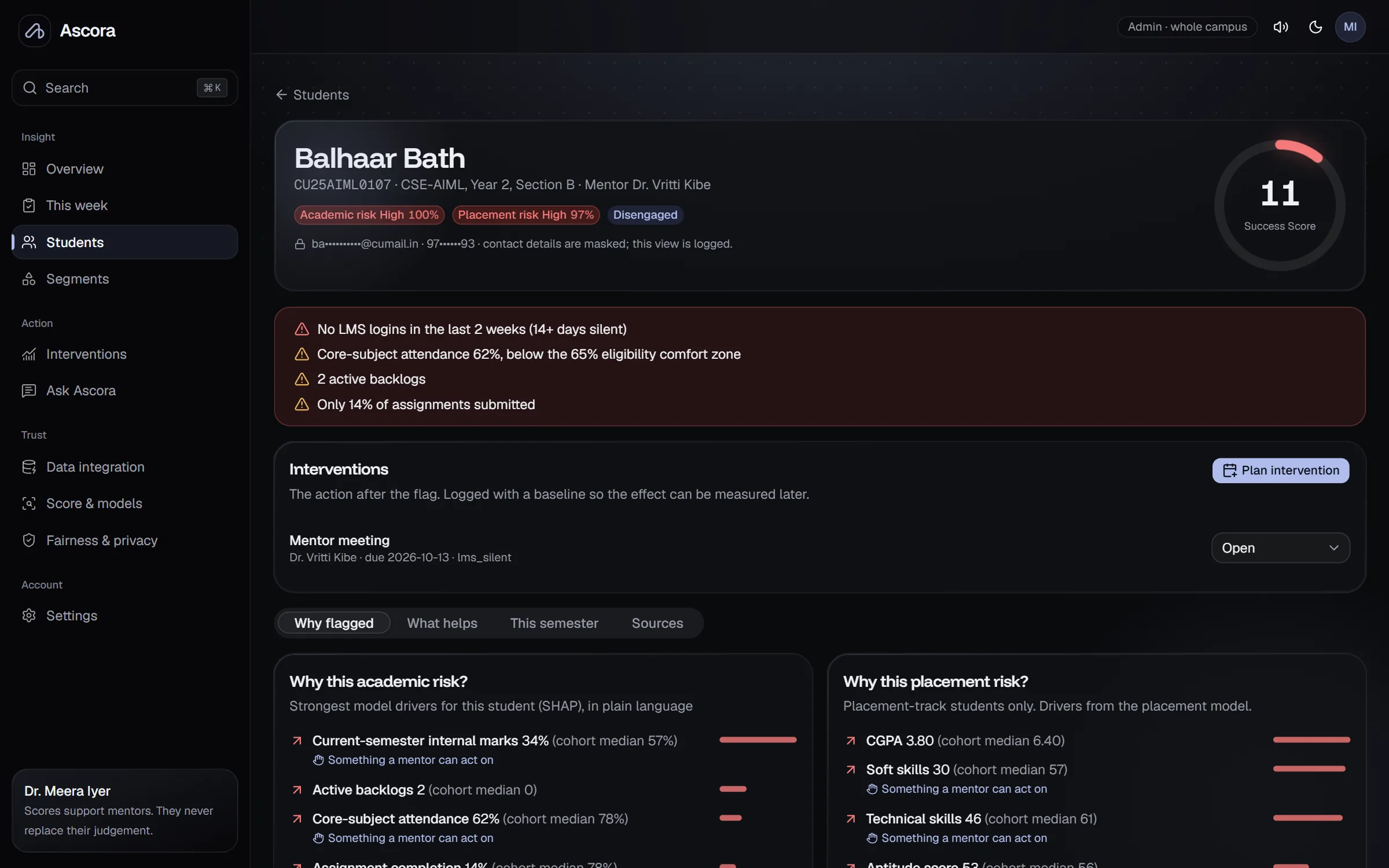
3 of 4
Act
Mentors enter the hours they have. Ascora plans who to meet and suggests the right support for each student's main driver.
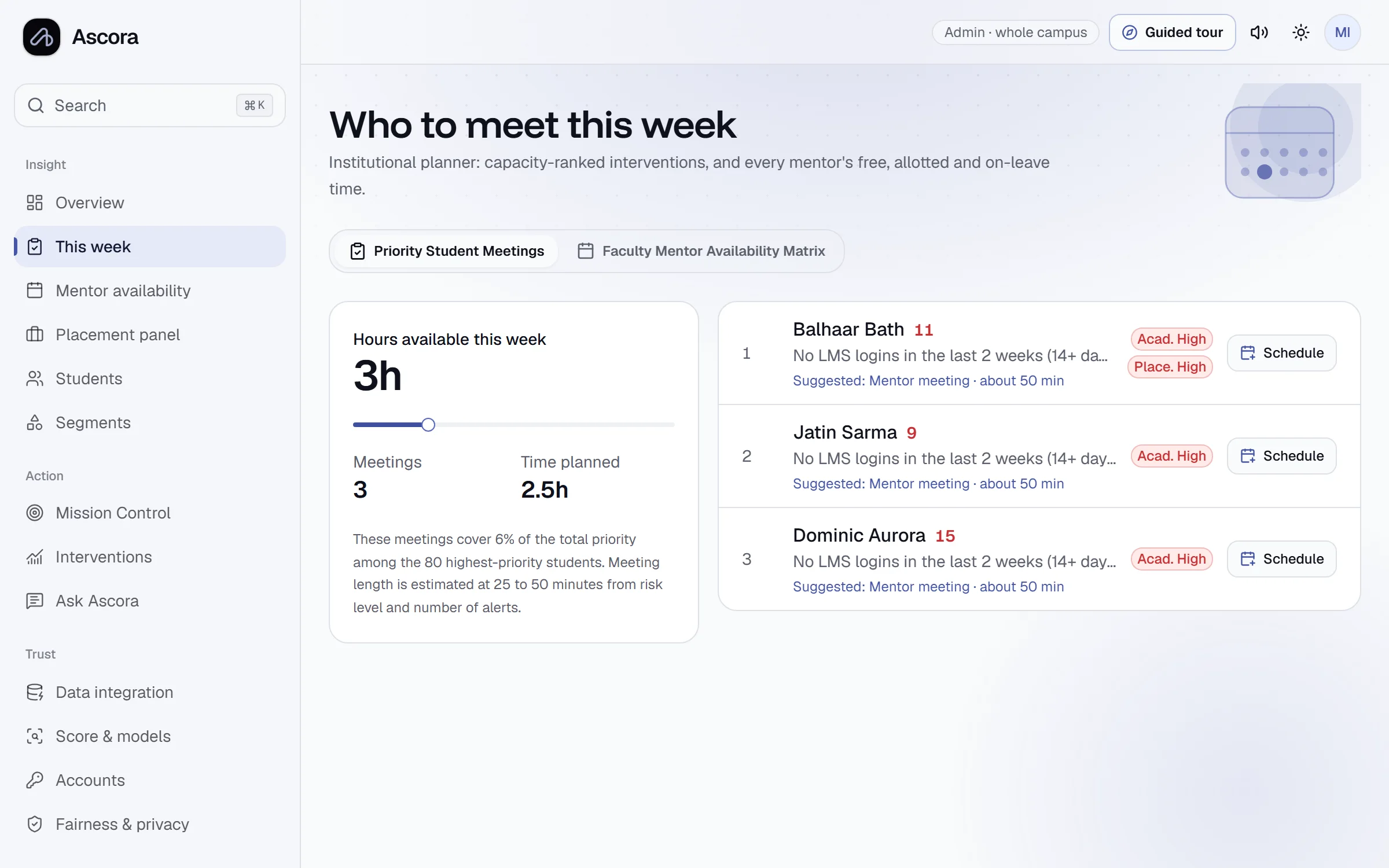
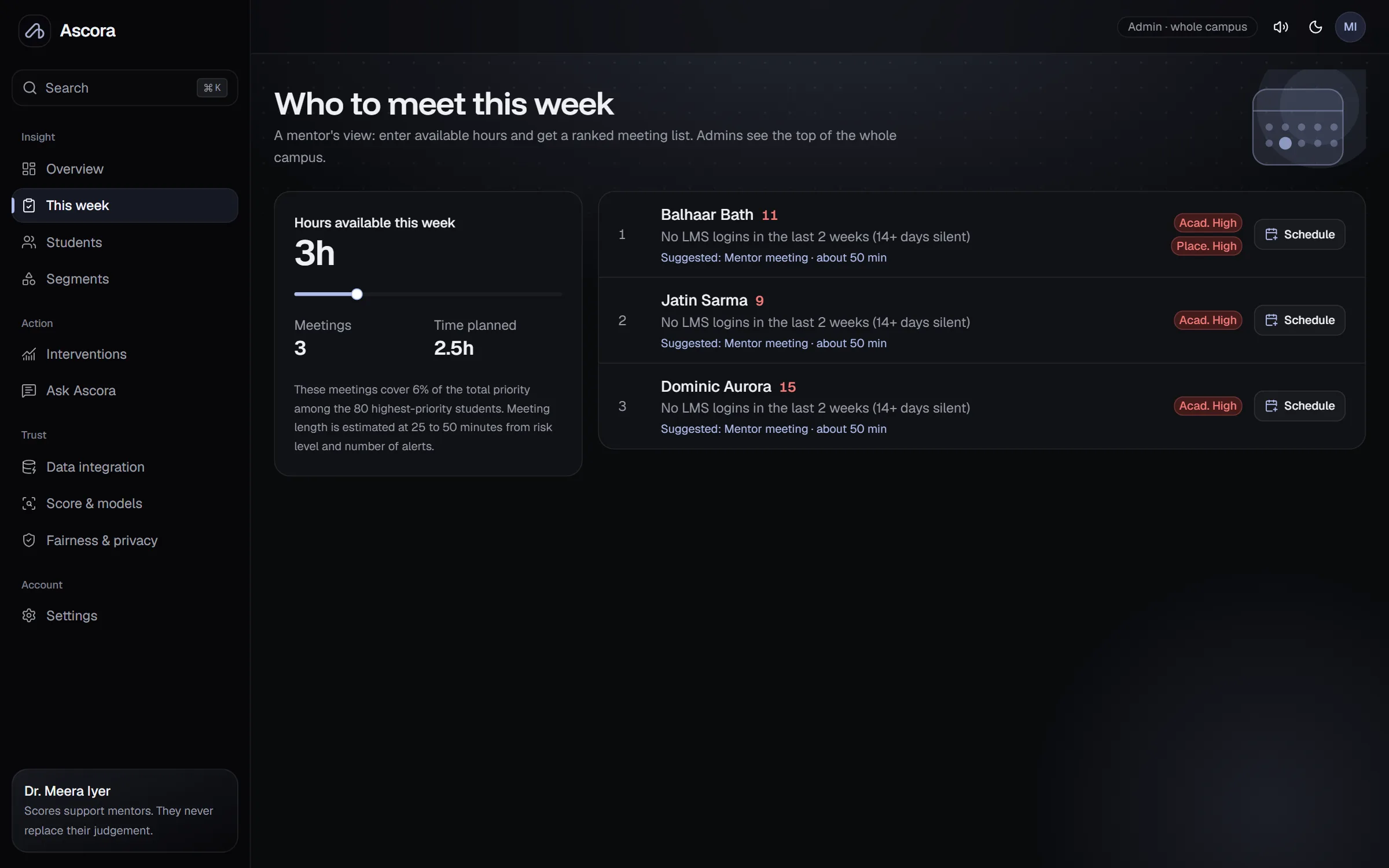
4 of 4
Measure
Interventions are logged with a baseline, models are audited for accuracy and fairness, and the score formula is open for anyone to read.
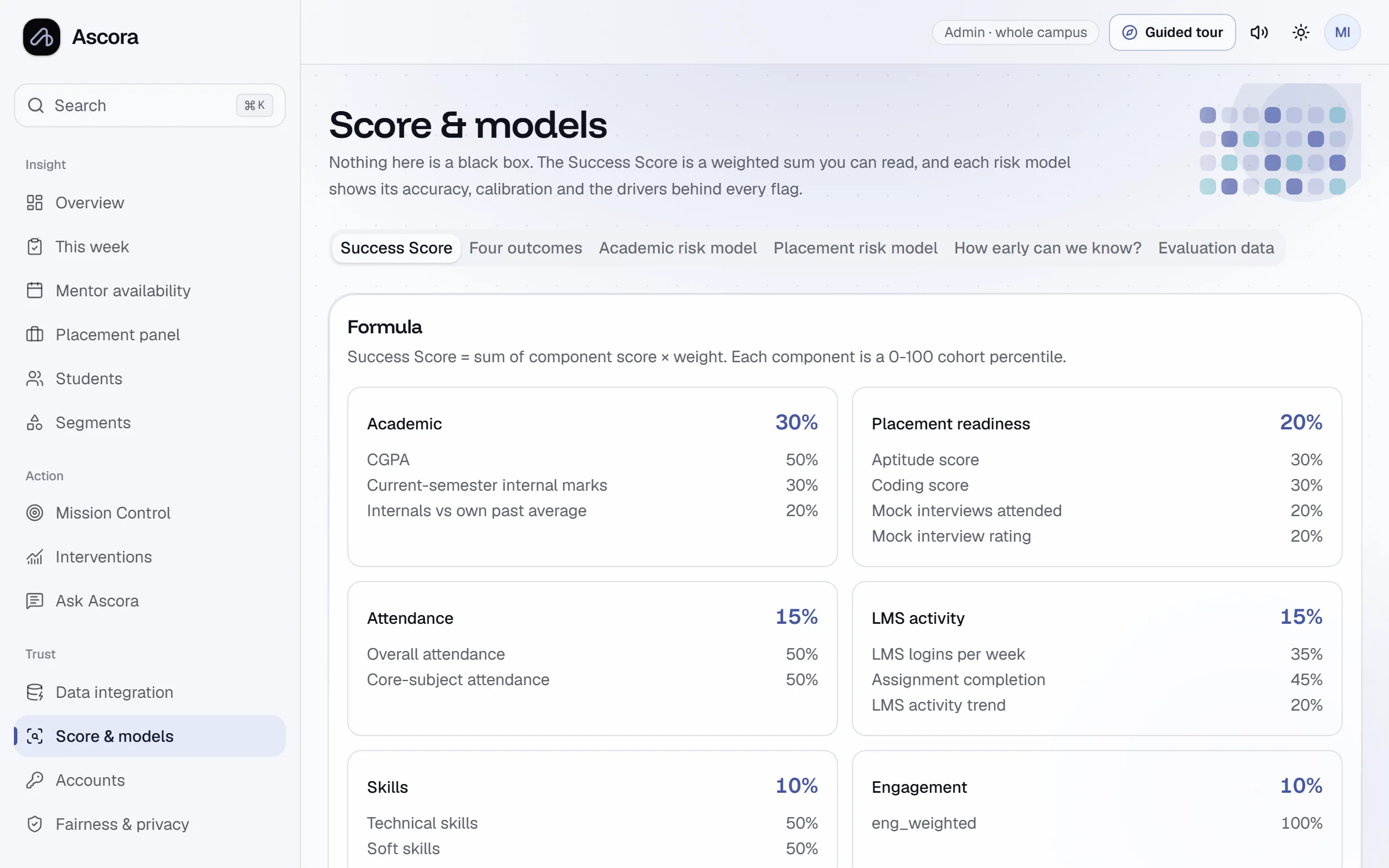
For every role
Built for the people who act on it
Heads of department see the whole campus. Mentors see their own students and what to do this week.
Messy data, one student
Four roll-number formats, emails with typos, names written as initials. Ascora matches them with 100% precision on auto-accepted links, and sends the ambiguous ones to a person.
Two risks, never blended
Academic risk and placement risk are separate models with separate reasons.
Held-out test set from the sample cohort. A plain baseline scores close; we say so.
Ask in plain English
Azure OpenAI turns a question into a validated filter. Never raw SQL.
year: [3]
placement_risk: ["High"]
mocks_max: 0
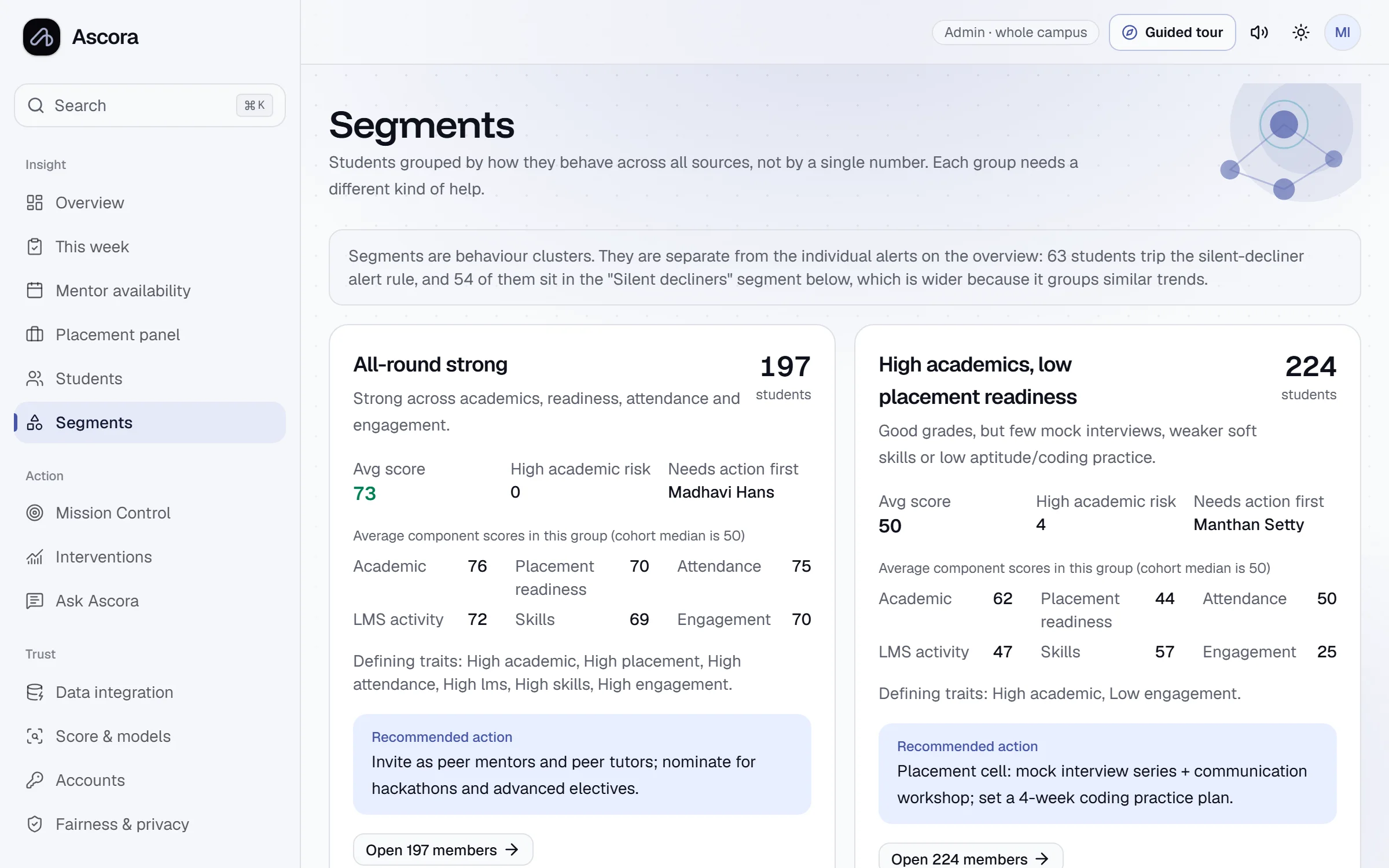
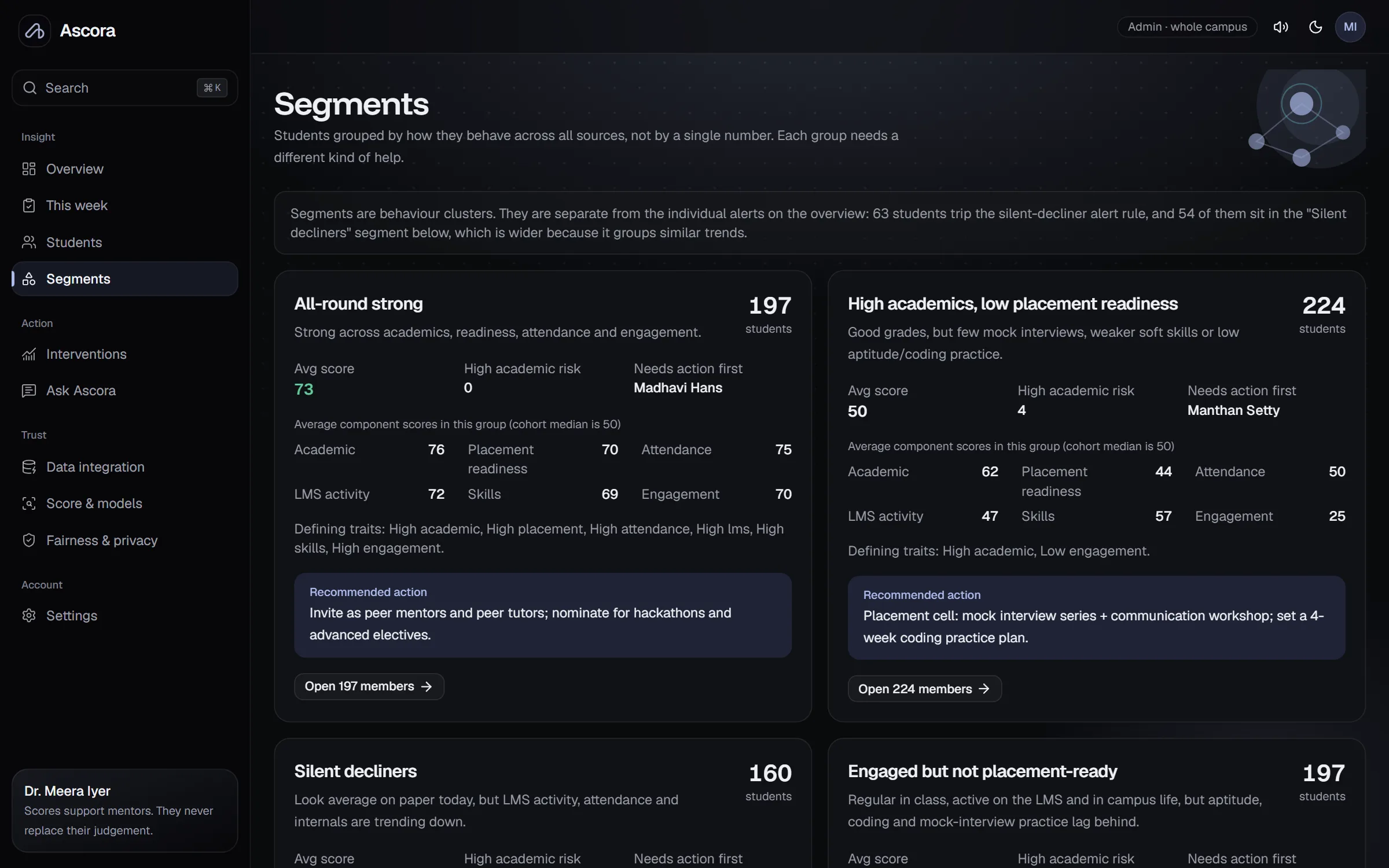
Groups that need different help
Six personas found in the data, from high academics with low placement readiness to disengaged students, each with a recommended action.
Private by design
Built for India's DPDP Act. Support, never surveillance.
- Roles enforced by the databaseMentors only ever see their own students.
- No labels shown to studentsRisk is for mentors. Students are offered help.
- Every profile view is auditedWho looked at which student, and when.
- Sensitive traits never predictUsed only to audit the models for fairness.
Flags alone don't change outcomes. Support does.
Purdue's Course Signals was widely copied, yet later analysis questioned whether it improved retention at all. Georgia State tracked hundreds of specific risk markers and gave advisors the time and workflow to act on them.
So Ascora is built around the step after the flag: a reason, a plan, an owner, and a way to check whether it worked.
Go deeper
Everything a judge, a dean or a mentor would ask
From early warning to real intervention
Sign in as a head of department or a faculty mentor and walk a full cohort of 1,200 students.